Every spring, property owners notice the same frustrating issue: fence lines that looked straight and solid all winter suddenly start to lean, sag, or pull out of alignment. Gates stop closing properly. Posts tilt at odd angles. Wire that was once tight begins to droop.
This isn’t a coincidence — it’s the result of what happens beneath the surface when frozen ground begins to thaw. Understanding why fence lines shift during this seasonal transition can help you prevent ongoing damage, reduce costly repairs, and protect your fencing investment for the long term.
What Happens to the Ground During Freeze–Thaw Cycles
Soil isn’t static. Throughout winter, it expands, contracts, and shifts in response to temperature changes. This movement plays a major role in spring fence problems.
Freezing: Expansion Below the Surface
When temperatures drop, moisture in the soil freezes and expands. This expansion pushes soil upward, a process known as frost heave. Anything anchored in the ground — including fence posts — can be lifted slightly as the soil expands.
Thawing: Uneven Settling
When temperatures rise, the ice melts. The soil doesn’t settle evenly, especially if water drains poorly. Some areas compact quickly while others remain soft and unstable.
Why Thawing Causes More Damage Than Freezing
Winter freezing tends to lift fence posts uniformly. Thawing, however, causes uneven settling, which is far more damaging. Posts may tilt, sink, or shift laterally, pulling entire fence lines out of alignment.
How Thawing Ground Affects Fence Lines
As the ground thaws, fence lines experience several types of stress that weren’t visible during winter.
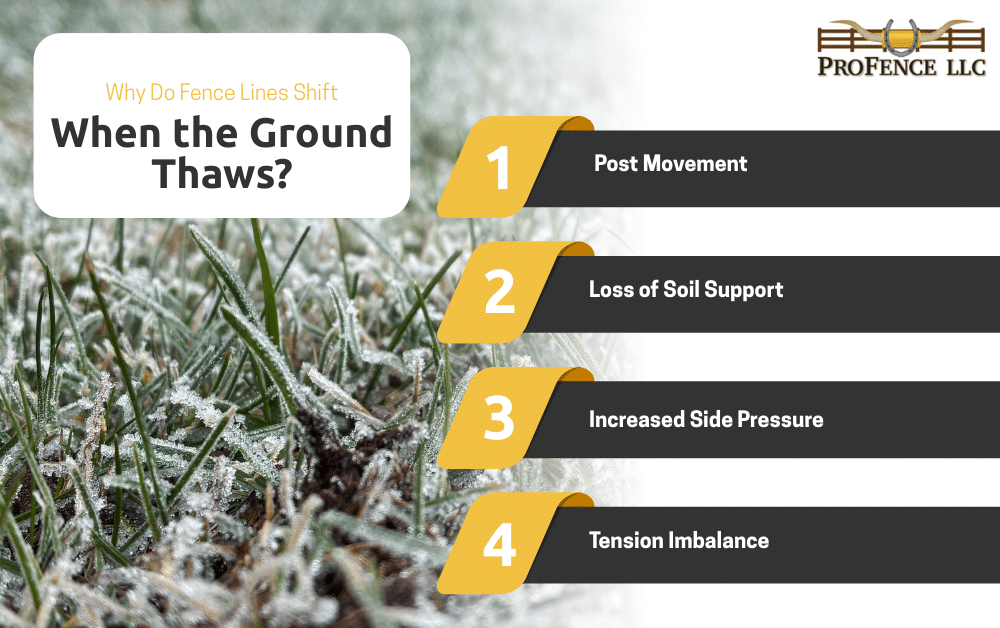
Post Movement
Posts that were lifted during freezing don’t always return to their original position. Even small changes in post height or angle can affect the entire fence line.
Loss of Soil Support
Melting ice leaves behind voids in the soil. Without proper compaction, posts lose lateral support and begin to lean under tension from wire or rails.
Increased Side Pressure
As soil becomes saturated, it pushes sideways against posts. This lateral pressure can bend posts, loosen backfill, or shift posts toward low spots.
Tension Imbalance
Fence wire remains under constant tension. When posts move, that tension redistributes unevenly, causing sagging sections, tight spots, or snapped wires.
Common Signs Your Fence Lines Are Shifting
Fence lines rarely fail without warning. Early signs are often subtle but become more obvious as spring progresses.
- Posts leaning forward, backward, or sideways
- Sagging wire or rails between posts
- Gates dragging on the ground or failing to latch
- Fence lines appearing wavy rather than straight
- Gaps forming at ground level where animals can slip through
Catching these issues early makes repairs far simpler and less expensive.
Fence Line Areas Most Vulnerable to Spring Thaw
Not all fence lines are affected equally. Certain areas are far more prone to movement during spring thaw.
Low-Lying Areas
Water collects in low spots, saturating soil and reducing its ability to support posts.
Corners and Braced Sections
Corners carry the highest tension. When soil shifts, these areas are often the first to fail.
Gates and High-Traffic Zones
Livestock congregate near gates, adding pressure to already-unstable posts.
Slopes and Drainage Paths
Melting snow moves downhill, eroding soil around fence posts and undermining their stability.
Why Some Fence Lines Shift More Than Others
If your fence line shifts every spring, there’s usually a construction or site issue behind it.
Shallow Post Depth
Posts set above the frost line are far more likely to shift during freeze–thaw cycles.
Poor Soil Conditions
Clay soils and saturated ground hold water longer, increasing frost heave and post movement.
Improper Backfill
Loose or uncompacted soil around posts allows movement as ice melts.
Aging or Rotted Posts
Weak posts are more susceptible to movement and structural failure.
Inadequate Bracing
Corners and end posts without proper bracing can’t resist seasonal tension changes.
How to Prevent Fence Lines From Shifting in Spring
While soil movement is inevitable, proper construction and maintenance can dramatically reduce its impact.
Set Posts Below the Frost Line
Deep post placement anchors fence lines in stable soil that isn’t affected by surface freezing.
Improve Drainage
Redirect runoff away from fence lines to prevent saturation and erosion.
Use Proper Bracing
Well-braced corners and gates absorb tension changes without shifting.
Choose Materials Wisely
Different soils and climates require different post materials and spacing.
Inspect Early and Often
Walking fence lines before and after thaw helps identify minor issues before they escalate.
When to Repair vs. Replace a Shifting Fence Line
Not every shifting fence requires full replacement, but temporary fixes often fail repeatedly.
Repair May Be Enough If:
- Posts are structurally sound
- Movement is minimal
- Wire tension can be corrected
Replacement Is Likely Needed If:
- Posts are rotted or cracked
- Fence lines shift every spring
- Corners or gates repeatedly fail
Investing in proper repairs now often prevents recurring costs year after year.
How ProFence Builds Fence Lines That Resist Ground Movement
At ProFence, fence construction starts with understanding soil conditions and seasonal movement. Our installations are designed to withstand freeze–thaw cycles common throughout the Mid-Atlantic.
ProFence Standards Include:
- Posts set to proper depth based on soil type
- Professional-grade bracing systems
- Site-specific drainage planning
- Materials chosen for long-term durability
- Experienced crews who understand seasonal ground behavior
This approach ensures fence lines remain straight, functional, and reliable — even through repeated winters.
Spring Thaw Reveals Fence Line Weaknesses
Fence lines shift when the ground thaws because soil moves, water drains unevenly, and posts lose support. While this process is natural, repeated shifting is not inevitable.
By understanding why fence lines move — and addressing post depth, drainage, and bracing — property owners can prevent recurring damage and extend the life of their fences.
If your fence line shows signs of movement each spring, now is the time to act.
ProFence specializes in building and repairing fence lines designed to handle real-world conditions — including freeze–thaw cycles and challenging soil.
Contact ProFence today at profence.org to schedule a fence inspection or repair consultation.