Uneven terrain adds a layer of complexity to fence installation that many property owners do not anticipate. Slopes, rocky soil, and elevation changes can all impact how a fence looks, how long it lasts, and how well it performs its job. Without proper planning, these conditions often lead to leaning fence lines, unstable posts, and ongoing maintenance issues that could have been avoided from the start.
Before beginning fence installation on uneven ground, it is important to understand how the land itself influences design, materials, and installation methods. Taking the time to evaluate terrain, soil conditions, and drainage early on helps ensure the fence is structurally sound, functions as intended, and holds up over time, especially in agricultural and livestock settings where durability matters most.
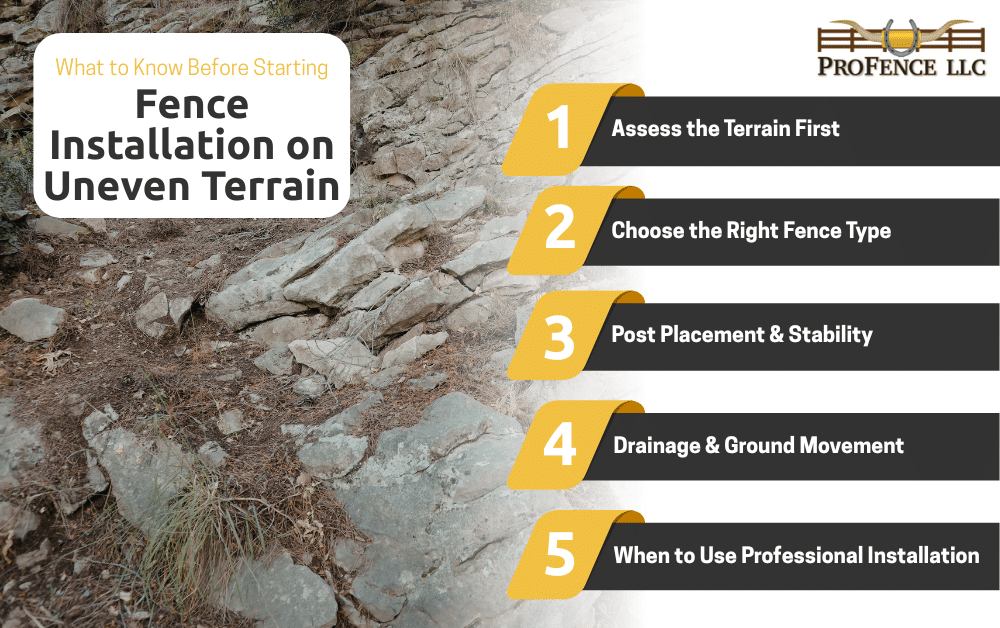
Assessing Your Terrain Before Fence Installation
Understanding the land is the most important step before any fence installation begins on uneven terrain. Slopes, elevation changes, and soil composition all influence how a fence should be designed and installed. Walking the property, noting high and low points, and identifying areas with exposed rock or loose soil helps prevent surprises once work starts.
Identifying Slopes, Elevation Changes, and Soil Conditions
Not all uneven ground creates the same challenges. A gradual slope requires different planning than a steep hillside, and rocky soil behaves very differently than clay or loam. Pay close attention to how the land rises and falls along the proposed fence line, especially around corners and transitions. These changes affect post depth, spacing, and how the fence will follow the contour of the land.
Soil conditions often determine whether standard installation methods will work or if installers need additional reinforcement. Rocky ground can limit post depth, while softer soil may require wider spacing or added bracing to maintain stability.
Why Terrain Evaluation Matters for Fence Installation
Skipping this evaluation often leads to problems that show up after the fence is already in place. A careful assessment helps avoid:
- Uneven fence lines that sag or lean over time
- Posts that loosen due to shallow depth or shifting soil
- Increased stress on wire or rails caused by elevation changes
- Drainage issues that weaken fence foundations
By understanding the terrain upfront, fence installation can be planned with the right materials, layout, and techniques to ensure long-term performance rather than short-term fixes.
Choosing the Right Fence Type for Uneven Ground
Not every fence design works well on uneven terrain, which makes material and style selection a critical part of fence installation. The goal is to choose a fence that can adapt to changes in elevation without sacrificing strength or function. A fence that looks good on flat land may struggle on slopes or rocky areas if it cannot flex or adjust with the terrain.
Fence Installation Options That Adapt to Slopes
Some fencing systems follow the natural contour of the land, while others use stepped installation to maintain a consistent height. The slope of the terrain and the purpose of the fence determine which approach works best.
Common options for uneven ground include:
- High tensile wire fencing that can adjust to elevation changes
- Woven wire fencing that allows for stepped or contoured layouts
- Electric fencing systems that remain effective on slopes
- Post and rail fencing when spacing and bracing are properly planned
Each option handles uneven ground differently, which is why matching the fence type to the land is so important.
Matching Fence Design to Function and Livestock Needs
Beyond terrain, the purpose of the fence plays a major role in fence installation decisions. Livestock fencing must account for animal pressure, movement, and safety, while crop protection or boundary fencing may prioritize height and durability instead. Choosing the right fence type helps prevent gaps at the ground level, reduces strain on posts, and keeps animals contained even as the land rises and falls.
When fence design aligns with both terrain and function, the result is a system that performs consistently and requires less adjustment over time.
Post Placement and Stability on Uneven Terrain
Posts are the foundation of any successful fence installation, and uneven terrain puts additional stress on them. Changes in elevation, rocky soil, and inconsistent ground depth all affect how posts should be placed and supported. If posts are not set correctly from the start, even a well-designed fence can shift, lean, or lose tension over time.
Fence Installation Challenges with Post Depth and Spacing
On uneven ground, standard post spacing does not always apply. Slopes often require posts to be placed closer together to handle increased tension, while rocky areas may limit how deep posts can be driven or set. In these situations, installers must adjust depth and spacing based on the specific conditions along the fence line rather than relying on uniform measurements.
Shallow posts in rocky soil can loosen more easily, especially when combined with elevation changes. This makes careful placement and consistency critical during installation, even if it means slowing the process to address problem areas properly.
Bracing and Anchoring for Long-Term Fence Stability
Proper bracing becomes even more important when fence installation takes place on uneven terrain. Corner posts, end posts, and areas with significant elevation change experience the most pressure and require added reinforcement.
Key stabilization considerations include:
- Using brace assemblies to absorb tension and prevent movement
- Anchoring posts securely where depth is limited by rock
- Reinforcing high-stress points such as corners and gates
These measures help ensure the fence remains straight and stable, even as the ground shifts or settles over time.
Planning for Drainage, Erosion, and Ground Movement
Installers often overlook water movement during fence installation, but on uneven terrain it poses one of the biggest threats to long-term stability. Slopes naturally direct runoff, and without proper drainage planning, water erodes soil around posts or washes out sections of the fence line entirely. Over time, even minor drainage issues cause posts to lean and weaken the foundation of the fence.
How Water Flow Impacts Fence Installation
On sloped ground, rainwater tends to follow the path of least resistance. This can create channels that remove soil from around fence posts or concentrate moisture in low areas. In rocky terrain, water may move quickly across the surface or collect in pockets, both of which can affect post stability. Fence installation plans should account for where water flows during heavy rain, seasonal thaw, or snow melt.
Preventing Fence Damage from Erosion Over Time
Addressing erosion early helps extend the life of the fence and reduces future maintenance. Positioning posts away from direct runoff paths, allowing for natural drainage, and reinforcing areas prone to soil movement all help protect the fence over time. Avoiding low spots where water consistently collects can also prevent gradual shifting that compromises fence stability.
When Professional Fence Installation Makes the Difference
Uneven terrain often turns what seems like a straightforward project into a complex one. Slopes, rocky soil, and shifting ground conditions require more than basic tools and measurements. In these situations, professional fence installation can help ensure the fence is built to handle the land rather than fight against it.
Why Uneven Terrain Requires Experience and Specialized Equipment
Installing a fence on uneven ground often involves adjusting post depth, spacing, and alignment on the fly. Professionals are trained to recognize when standard methods will not work and know how to adapt without compromising stability. Specialized equipment also allows posts to be set more securely in difficult soil conditions, reducing the risk of future movement or failure.
Avoiding Costly Mistakes in Fence Installation on Uneven Land
Mistakes made during installation on challenging terrain can be expensive to correct. Poorly placed posts, inadequate bracing, or ignoring drainage issues often lead to premature repairs or full replacements. Professional fence installation helps avoid these issues by addressing terrain challenges from the start, resulting in a fence that performs reliably and requires less ongoing maintenance.
Conclusion
Successful fence installation on uneven terrain starts long before the first post is set. Slopes, rocky soil, drainage patterns, and ground movement all influence how a fence should be planned and built. Taking the time to evaluate these factors helps prevent common issues like shifting posts, uneven fence lines, and premature wear.
With the right preparation, materials, and installation approach, uneven ground does not have to limit performance or durability. If you are planning fence installation on uneven terrain, our experienced team at ProFence can help design and install a solution built to handle challenging ground conditions and perform reliably for the long term.