At a glance, your fence might look fine.
Maybe there’s a slightly loose post, a bit of sag in the wire, or some overgrowth starting to creep in along the fence line. Nothing major. Easy to deal with later.
But as summer rolls in, those small fence issues rarely stay small.
Between rising temperatures, increased livestock pressure, and rapid vegetation growth, your fence system goes through its toughest test of the year. What started as a minor concern in spring can quickly turn into a costly and disruptive problem if it is not addressed early.
If you want your fence to hold up through peak season, now is the time to take small issues seriously.
Why Small Fence Issues Get Worse in Summer
Summer puts constant pressure on your fence system. Every day of use, combined with environmental conditions, amplifies existing weaknesses.
Increased Livestock Pressure
As grazing season reaches full swing, livestock interact with fence lines more frequently. Whether moving between paddocks, gathering near gates, or pushing against boundaries, this constant pressure exposes weak points quickly.
Heat and Dry Conditions
Hot weather can affect both soil and materials:
- Soil dries out and loosens around posts
- Wood expands and contracts
- Wire tension changes under heat
These shifts can turn a stable fence into an unstable one over time.
Rapid Vegetation Growth
By early summer, vegetation is growing fast. Fence lines that were clear in spring can become overgrown in a matter of weeks.
This overgrowth:
- Adds weight to fencing
- Traps moisture
- Hides underlying problems
Continuous Use
Unlike other times of year, summer offers little downtime. Fence systems are in constant use, which means issues are not only exposed but accelerated.
Common Small Fence Issues That Escalate Quickly
Not all fence problems start as major failures. Most begin as small, manageable issues that grow worse over time.
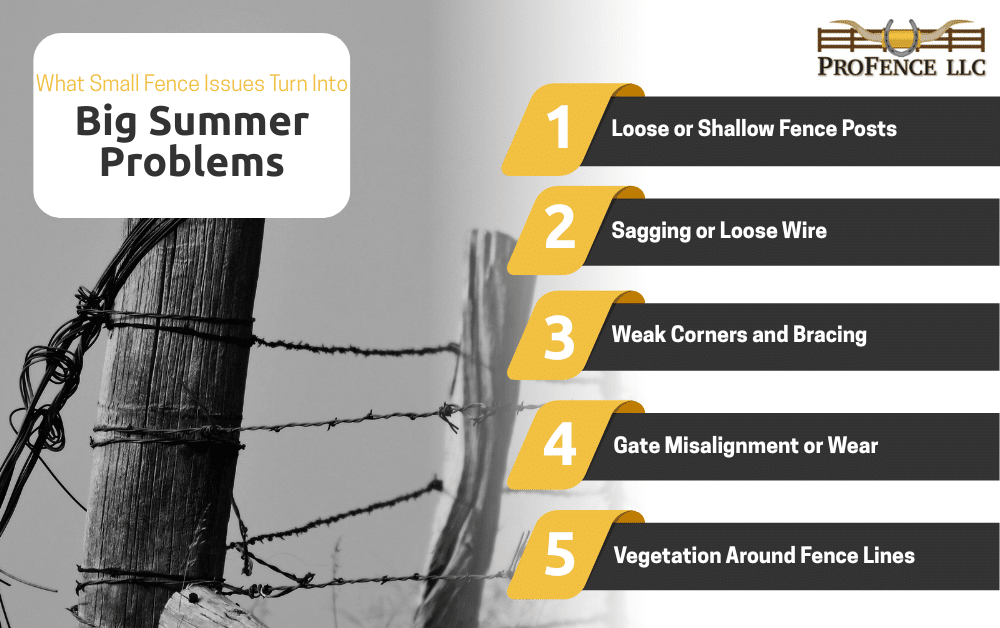
Loose or Shallow Fence Posts
A post that feels slightly loose in spring may not seem urgent. But as the ground dries and livestock apply pressure, that small movement can turn into:
- Leaning posts
- Misaligned fence sections
- Complete post failure
Once a post shifts significantly, it impacts everything connected to it.
Sagging or Loose Wire
Wire tension is critical to fence performance. Even slight sagging can create weak spots that animals quickly notice.
Over time:
- Livestock begin pushing against loose sections
- Wire stretches further
- Containment becomes unreliable
What started as a simple tightening job can turn into a full section replacement.
Weak Corners and Bracing
Corners carry the most tension in a fence system. If bracing is even slightly compromised, the entire structure can suffer.
Small issues in corners can lead to:
- Loss of tension across long stretches
- Increased stress on posts
- Structural instability
Corner failures are often one of the most expensive repairs.
Gate Misalignment or Wear
Gates are one of the most used parts of any fence system. A gate that is slightly off in spring can quickly become a problem in summer.
Common issues include:
- Gates dragging on the ground
- Latches not closing properly
- Hinges loosening under frequent use
As traffic increases, these problems get worse and can disrupt daily operations.
Vegetation Around Fence Lines
Overgrowth may seem harmless, but it creates several hidden problems:
- Adds pressure and weight to wire
- Holds moisture against posts and materials
- Hides damage that goes unnoticed
Left unchecked, vegetation can significantly reduce fence lifespan.
How These Issues Turn Into Major Problems
Ignoring small fence issues rarely saves time or money. In most cases, it leads to bigger and more expensive problems.
Fence Line Failure
Small weak spots eventually fail under pressure. This can result in:
- Broken sections
- Animals escaping
- Loss of containment
Once a fence line fails, repairs become urgent rather than planned.
Increased Repair Costs
Minor fixes are usually quick and affordable. But once issues grow, repairs often involve:
- Replacing multiple posts
- Rebuilding sections
- Reinforcing entire fence lines
Emergency repairs are almost always more expensive than preventative maintenance.
Safety Risks
Damaged fencing can create hazards for both livestock and people.
- Sharp wire or broken boards
- Unstable posts
- Uneven or collapsed sections
These risks increase the chance of injury and liability.
Operational Disruptions
Fence problems during peak season can interrupt daily routines.
- Delays in moving livestock
- Time spent on unexpected repairs
- Disruption to grazing schedules
Instead of focusing on productivity, time is spent fixing avoidable problems.
High-Risk Areas to Watch Closely
Some areas of your fence system experience more stress than others. These should be checked regularly.
Focus on:
- Corners and end posts
- Gates and entry points
- Low spots and soft ground
- High-traffic livestock areas
- Fence lines near water sources
These zones are where small issues are most likely to escalate first.
How to Catch Fence Issues Before They Escalate
The good news is that most fence problems can be prevented with simple, proactive steps.
Routine Mid-Season Inspections
Walk your fence lines regularly and look for:
- Loose posts
- Sagging wire
- Signs of wear or pressure
- Vegetation buildup
Catching issues early makes repairs faster and easier.
Quick Repairs Make a Big Difference
Address small problems as soon as they appear.
- Tighten loose wire
- Reset unstable posts
- Reinforce weak areas
- Clear vegetation
Small fixes now prevent larger repairs later.
Focus on Pressure Points
Pay extra attention to areas that see the most activity. These are the sections most likely to fail first.
When to Repair vs Replace
Not every issue requires a full replacement, but some do.
Repair When:
- The issue is isolated
- Materials are still in good condition
- The structure is mostly intact
Replace When:
- Problems are recurring
- Multiple sections are failing
- Structural integrity is compromised
Making the right decision early can save time and money in the long run.
How ProFence Helps Prevent Mid-Season Fence Failures
At ProFence, we understand how quickly small fence issues can turn into major problems during summer.
We help property owners stay ahead of these issues with:
- Professional fence inspections
- Targeted repairs and reinforcements
- Full fence upgrades when needed
- Solutions designed for high-pressure agricultural use
Our goal is to help you avoid emergency repairs and keep your fence system performing at its best all season long.
Small Issues Don’t Stay Small in Summer
A fence that looks “good enough” in spring may not hold up under summer conditions.
Small fence issues like loose posts, sagging wire, or overgrowth can quickly escalate into major failures that impact your property, livestock, and daily operations.
Taking action early is the key to avoiding costly repairs and disruptions.
Fix Small Fence Issues Before They Become Big Problems
If you have noticed small issues along your fence line, now is the time to address them.
ProFence provides professional inspection, repair, and installation services to keep your fence strong through the busiest time of year.
Contact ProFence today at https://profence.org/ to fix fence issues before they turn into major summer problems.