Choosing the right agricultural fence is one of the most important long-term investments a farm can make. Fencing defines property boundaries, protects crops and equipment areas, enhances the appearance of your farm, and reduces long-term maintenance costs. But with so many types of fencing available — from high-tensile and woven wire to board fencing, poly coat, and electric systems — how do you know which option is best for your operation?
This guide breaks down the most common agricultural fence types, their strengths, and the situations where they perform best. Whether you’re securing crop fields, marking boundaries, or designing a premium entrance, the right fence makes all the difference.
High-Tensile Fencing
What High-Tensile Fencing Is
High-tensile fencing is a type of agricultural fence made from high-strength steel wire that is stretched tightly between posts to form a durable, long-lasting boundary. Unlike older low-carbon wire systems, high-tensile wire maintains its tension over time, resisting sagging and weather-related distortion. The use of tensioning tools ensures that every strand holds a consistent pull across the entire fence line, even on uneven ground. Because of its rigidity and reliability, high-tensile fencing is widely considered one of the most efficient modern fencing systems for large agricultural properties.
Benefits of High-Tensile Fencing
High-tensile fencing is known for its exceptional durability, allowing it to withstand harsh weather and ground movement without losing tension. It requires very little maintenance, which makes it one of the most cost-effective agricultural fence options for long-term use. Because the wire stays tight over time, fence lines remain straight and secure, even across large properties. Its efficient design also reduces material and installation costs, especially on long perimeter runs.
Best Uses for High-Tensile in Agriculture
High-tensile fencing works well for large agricultural properties where long, continuous fence lines are needed. Because it remains tight and stable, it is ideal for marking perimeter boundaries and defining property lines. It can also be used to secure crop fields or divide large tracts of land with minimal maintenance. Farms often select high-tensile fencing when seeking a long-lasting, cost-efficient solution.
Woven Wire Fencing
What Woven Wire Fencing Is
Woven wire fencing is an agricultural fence created by weaving horizontal and vertical wires into a strong, grid-like mesh. This interwoven structure distributes pressure evenly, making the fence difficult to distort or damage. Because it provides a solid physical barrier, it is commonly used in agricultural settings that require fully enclosed sections. The durability of woven wire makes it a dependable choice for long-term farm infrastructure.
Benefits of Woven Wire
Woven wire fencing offers outstanding durability because its woven design prevents the fence from losing shape under pressure. It creates a secure enclosure that protects agricultural areas from intrusion or disturbance. Its mesh spacing options allow farmers to select a pattern that suits their specific needs. This combination of strength and versatility makes woven wire a preferred agricultural fence for secure boundaries.
Best Uses for Woven Wire in Agriculture
Woven wire fencing is ideal for areas that need complete enclosure or additional security. Its sturdy construction makes it effective for protecting crop zones, orchards, or high-value fields that should remain undisturbed. Because it resists deformation, it stays reliable over years of use. Farms choose woven wire when they need a fence that provides both structure and long-term strength.
Poly Coat Fencing
What Poly Coat Fencing Is
Poly coated fencing uses high-tensile wire wrapped in a polymer coating to enhance visibility and durability. This smooth exterior layer protects the wire inside from UV rays, moisture, and wear over time. As a result, the fence maintains a clean appearance while remaining structurally strong. The coating also reduces the risk of abrasion in areas where people or equipment frequently pass by.
Benefits of Poly Coat Fencing
Poly coat fencing provides excellent visibility, which helps clearly define property boundaries and improves safety around work areas. The coated surface also protects the internal wire, helping the fence maintain its appearance for many years. Its smooth finish reduces the risk of accidental scrapes or snags near busy farm lanes. Overall, it combines practicality with visual appeal.
Best Uses for Poly Coat in Agriculture
Poly coat fencing is well-suited for areas where appearance and visibility matter, such as farm entrances or drive lanes. Its polished look enhances the presentation of key access points on the farm. The durable coating ensures long service life even with frequent exposure to sunlight and weather. Many farms use it to create boundaries that are both functional and visually appealing.
Electric Fencing
What Electric Fencing Is
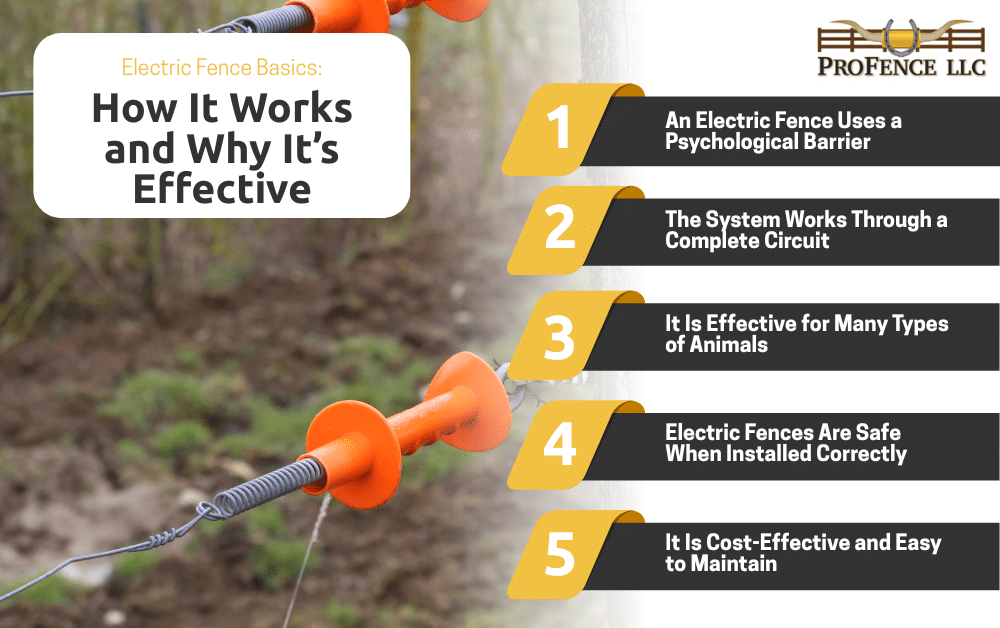
Electric fencing uses energized wire to create a psychological boundary rather than a heavily reinforced physical structure. When touched, the wire emits a brief, controlled pulse that discourages contact. Because it relies on voltage instead of physical rigidity, electric fencing can be installed quickly and with fewer materials. This flexibility makes it ideal for fencing layouts that change seasonally.
Benefits of Electric Fencing
Electric fencing is among the most affordable agricultural fence options and can be installed with minimal tools. Its lightweight, portable design allows farmers to shift boundaries as needed throughout the year. The fence provides an effective deterrent while keeping overall costs low. It’s a practical solution for farms that need agility and customization.
Best Uses for Electric Fencing in Agriculture
Electric fencing works well for temporary divisions or areas where boundaries shift frequently. It is often used for seasonal crop protection or short-term property organization. Because it can be moved or expanded easily, farms can adapt their layout quickly. Its low cost makes it a practical choice for supplemental fencing.
Board Fencing
What Board Fencing Is
Board fencing is a wooden post-and-rail system that gives a farm a clean, traditional appearance. Its solid construction creates a clear visual boundary that enhances the overall aesthetic of the landscape. The straight, structured lines are often used to define prominent areas of a property. While it requires more maintenance than wire fencing, its visual impact is unmatched.
Benefits of Board Fencing
Board fencing offers excellent visibility, helping guide movement around major farm entry points or pathways. Its classic look adds a professional and inviting feel to the property. The stable structure creates a defined perimeter that is easy to identify at a distance. Farms frequently choose board fencing for areas where presentation matters.
Best Uses for Board Fencing in Agriculture
Board fencing is commonly installed along driveways, entrance lanes, and other high-visibility areas. Its polished appearance makes it ideal for establishing a strong first impression on visitors. Because it stands out visually, it helps direct traffic toward designated areas. Farms use board fencing when they want a functional boundary that also enhances the landscape.
Organic Farm Fencing & Metal Posts
What Organic Farm Fencing Means
Organic farm fencing refers to agricultural fence systems built without chemically treated materials, making them safe for soil and crop zones. These fences follow environmentally friendly guidelines that help maintain organic certification. By avoiding preservatives, they protect beneficial organisms in the soil. Organic fencing supports regenerative and sustainable farming practices.
Benefits of Organic-Compatible Fencing
Organic-compatible fencing protects farm soils from chemicals that could interfere with organic production. Materials used in these systems are chosen to minimize ecological disruption. This type of fencing aligns with certification standards and long-term environmental goals. Many farms adopt organic fencing to maintain the purity of their growing areas.
Why Metal Posts Are Popular
Metal posts have become a preferred option because they resist rot, moisture, pests, and warping while requiring very little maintenance. Their durability makes them suitable for long-term agricultural fence installations. They do not require chemicals, which aligns with organic farming practices. Metal posts also withstand harsh weather, offering reliable stability year-round.
How to Choose the Best Agricultural Fence for Your Farm
Evaluate Your Property Layout & Goals
Choosing the right agricultural fence starts with assessing your land’s size, shape, and terrain. Large open fields often benefit from long, straight fencing runs, while uneven or sloped land may require more flexible fence types. You should also consider whether your needs are temporary or permanent. Evaluating these factors ensures your fencing supports both daily operations and long-term goals.
Consider Longevity & Maintenance
Each fencing type has unique maintenance requirements, so it’s important to understand long-term expectations. High-tensile fencing offers excellent durability with minimal upkeep. Board fencing provides strong visual appeal but may require frequent upkeep. Electric fencing is flexible and affordable but must be monitored regularly to maintain voltage.
Determine Your Budget & Future Plans
Budget considerations extend beyond installation costs to include the fence’s lifespan and maintenance needs. High-tensile fencing often delivers the best long-term value. Poly coat and board fencing may cost more upfront but offer distinct visual or structural benefits. Choosing a system that matches your future expansion plans can prevent costly changes later.
Think About Aesthetic vs Functional Needs
Different farms have different priorities—some focus on durability, while others prioritize appearance. Board and poly coat fencing create a polished, visible boundary ideal for entrances or showpiece areas. High-tensile and woven wire offer long-term practicality and strength. Identifying your priorities helps you choose a fence that aligns with your farm’s identity.
Final Verdict — What Is the Best Agricultural Fence?
Best Overall Agricultural Fence
High-tensile fencing is widely regarded as the best all-around agricultural fence due to its strength, long lifespan, and low maintenance needs. It offers reliable performance across large properties and stands up to demanding environments.
Best Fence for Enclosed or High-Security Areas
Woven wire fencing excels in areas requiring enclosed, high-security boundaries. Its strong mesh design creates a physical barrier that remains dependable year after year.
Best Fence for Visibility or Farm Entrances
Board and poly coat fencing provide superior visibility and a clean, professional appearance, making them excellent choices for driveways, entrances, and high-profile boundaries.
Best Fence for Organic Properties
Metal post systems paired with untreated or natural materials support organic certification and soil health, making them the preferred option for sustainable operations.
Conclusion
Choosing the right agricultural fence comes down to knowing your land, your goals, and how much maintenance you want over time. Whether you prioritize strength, cost-efficiency, appearance, or sustainability, there is a fencing solution tailored to your farm’s needs.
For farmers seeking long-lasting performance and professional installation, selecting the right agricultural fence ensures your farm stays protected, organized, and visually impressive for years to come.
If you’re ready to upgrade your farm’s fencing, ProFence can help you choose and install the right Agricultural Fence for long-term reliability.