As winter fades and warmer weather approaches, many property owners start thinking about new fencing projects. But before posts can be set and wire can be stretched, there’s one major hurdle that often gets overlooked: overgrown land. Thick brush, hidden stumps, fallen limbs, and uneven ground can all delay or complicate a spring fence installation if they aren’t addressed early.
Preparing your land ahead of time doesn’t just make installation easier — it helps ensure your fence is built correctly, lasts longer, and stays on schedule during the busiest time of year. If you’re planning a fence for livestock, property boundaries, orchards, or pastures, here’s how to properly prepare overgrown land for a successful spring installation.
Why Overgrown Land Delays Spring Fence Installation
Spring is the busiest season for fencing companies. When land isn’t prepared, projects slow down quickly — or get pushed back entirely.
Common Problems Caused by Overgrowth
- Blocked fence lines: Thick brush and trees make it difficult to lay out straight, accurate fence paths.
- Hidden obstacles: Stumps, rocks, and roots often aren’t visible until clearing begins.
- Unstable footing: Overgrown areas often hold moisture, creating soft ground that slows equipment.
- Limited access: Heavy vegetation prevents machinery from reaching fence lines efficiently.
When clearing hasn’t been done in advance, fencing crews must spend valuable installation time removing obstacles. That can lead to schedule changes, added costs, or rushed work once the land is finally ready.
Preparing your land early helps avoid these bottlenecks and keeps your spring fence installation on track.
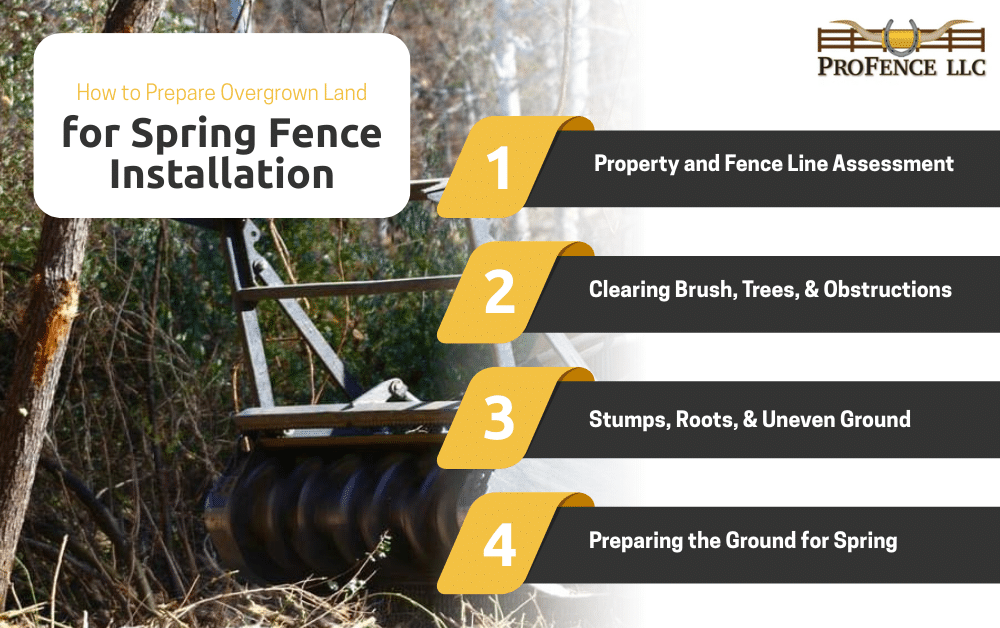
Start With a Property and Fence Line Assessment
Before any clearing begins, it’s important to understand what you’re working with. A thorough assessment helps prevent unnecessary work and ensures the land is cleared exactly where it needs to be.
Walk the Property
Take time to walk the area where the fence will be installed. Look for:
- Dense brush or overgrowth
- Tree lines or wooded edges
- Low spots where water collects
- Slopes or uneven terrain
- Existing fence remnants or debris
Plan the Fence Layout
Even a rough layout helps guide clearing efforts. Identify:
- Perimeter fence lines
- Interior pasture divisions
- Gate locations and access points
- Areas requiring extra width for equipment or maintenance
Tools like Google Maps or property parcel maps can help visualize fence paths before clearing begins. The more clearly defined the fence line is, the more efficiently land clearing can be completed.
Clearing Brush, Trees, and Obstructions
Once the layout is established, the next step is removing vegetation that interferes with the fence line.
What Needs to Be Cleared
- Thick brush and weeds
- Small trees and saplings
- Low-hanging limbs
- Vines that wrap around existing structures
Clearing should extend beyond the exact fence line. Leaving extra space on each side allows for:
- Easier fence installation
- Ongoing maintenance access
- Reduced vegetation pressure on posts and wire
DIY vs. Professional Clearing
Some property owners attempt to clear land themselves, but this can be time-consuming and incomplete. Professional land clearing offers several advantages:
- Faster completion with proper equipment
- Safer removal of large or tangled vegetation
- Cleaner results that won’t interfere with installation
- Less risk of damaging soil structure
For large or heavily overgrown properties, professional clearing is often the most efficient and cost-effective option.
Addressing Stumps, Roots, and Uneven Ground
One of the most common causes of fence failure starts below the surface. Stumps, roots, and uneven ground can undermine even the best fence installation if they aren’t handled correctly.
Why Stumps and Roots Matter
- Posts can’t be set to proper depth near roots.
- Remaining stumps eventually rot, creating voids in the soil.
- Root systems can push posts out of alignment over time.
Removing stumps and major roots ensures fence posts are anchored in solid, stable ground.
Leveling and Grading
Overgrown land often hides dips, ridges, and erosion issues. Addressing these before installation:
- Prevents water pooling at fence posts
- Reduces frost heave risk
- Creates uniform post spacing and height
- Improves long-term fence durability
A properly graded fence line helps your fence stand straight and strong for years.
Preparing the Ground for Spring Installation
Timing is everything when it comes to land preparation. Clearing too late can create muddy conditions, while clearing early gives soil time to stabilize.
Clear Before the Spring Thaw
Late winter and early spring are ideal times to prepare land:
- Frozen or firm ground supports heavy equipment
- Vegetation is easier to remove before growth resumes
- Clearing can be completed without creating deep ruts
Let the Soil Settle
After clearing and grading, soil needs time to settle naturally. This prevents posts from shifting once installed.
Prevent Erosion
Proper preparation includes:
- Managing runoff paths
- Stabilizing slopes
- Avoiding over-disturbance of soil
When done correctly, land preparation makes spring fence installation smoother, faster, and more reliable.
Why Professional Land Clearing Makes a Difference
Professional land clearing isn’t just about removing vegetation — it’s about preparing the land specifically for fencing.
Benefits of Professional Preparation
- Faster installation: Fence crews can start immediately without delays.
- Accurate layouts: Fence lines stay exactly where planned.
- Lower long-term costs: Fewer repairs caused by shifting posts or root damage.
- Single-contractor efficiency: One team manages clearing and fencing together.
When land preparation and fence installation are coordinated, projects move efficiently and stay on schedule during peak spring demand.
How ProFence Prepares Land for Spring Fence Installation
At ProFence, land preparation is treated as a critical part of the fencing process — not an afterthought.
What Sets ProFence Apart
- Experienced crews familiar with agricultural, rural, and large-acre properties
- In-house land clearing services designed specifically for fencing projects
- Efficient scheduling to beat the spring rush
- Fence systems tailored for livestock, wildlife control, orchards, and property boundaries
By handling both land clearing and fencing, ProFence ensures your project is planned correctly from the start and completed without unnecessary delays.
Preparation Is the Key to a Successful Spring Fence Installation
Overgrown land doesn’t just slow down fence installation — it compromises the quality and longevity of the fence itself. By preparing your property early, you create the conditions needed for a smooth, on-time spring fence installation.
Clearing brush, removing stumps, leveling ground, and planning fence lines ahead of time:
- Prevents costly delays
- Improves fence durability
- Reduces maintenance issues
- Keeps spring projects on schedule
Spring comes fast, and fence companies book quickly. The earlier your land is ready, the better your results will be.
If your property is overgrown and you’re planning a fence this spring, now is the time to act. ProFence offers professional land clearing and fence installation services designed to work together seamlessly.
Contact ProFence today at profence.org to schedule land clearing and reserve your spring fence installation.