As winter fades and spring approaches, wildlife behavior begins to shift fast. One of the biggest changes farmers and property owners notice is increased deer movement. Trails reappear, feeding patterns change, and pressure along fence lines ramps up quickly.
What many people do not realize is that post-winter deer movement is one of the leading causes of early spring fence damage. Fences that looked fine all winter can suddenly show signs of stress, bending, or failure as deer activity increases. Understanding how and why deer move after winter helps you protect fence lines before damage becomes costly.
Why Deer Movement Changes After Winter
Deer behavior is highly seasonal. During winter, movement is limited due to deep snow, cold temperatures, and reduced food sources. Once conditions improve, deer immediately begin expanding their range.
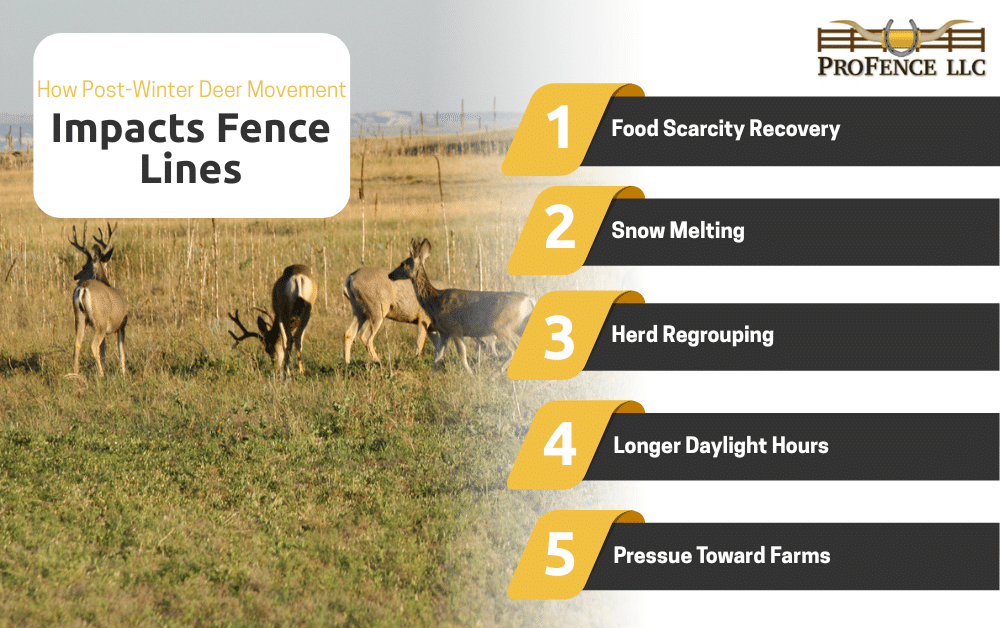
Key reasons deer movement increases after winter include:
- Food scarcity recovery as deer search for early green growth
- Snow melt opening up natural travel corridors
- Herd regrouping after winter isolation
- Longer daylight hours increasing daily movement
- Pressure toward farms and orchards where early vegetation appears first
This surge in activity means deer are crossing fence lines more frequently and with greater force than at any other time of year.
How Post-Winter Deer Movement Affects Fence Lines
As deer activity increases, fence lines become a physical obstacle that wildlife repeatedly challenges. Over time, this pressure causes visible and structural damage.
Common impacts include:
- Repeated jumping attempts that weaken fence height and tension
- Leaning or shifting posts from repeated impact
- Stretched wire that loses effectiveness
- Broken rails or loosened fasteners
- Increased stress at fence corners and transition points
Deer are creatures of habit. Once they find a crossing point, they will use it again and again. This repeated traffic concentrates damage in the same locations, accelerating failure.
Fence Line Areas Deer Target First
Not all fence sections face equal pressure. Deer movement tends to follow predictable paths based on terrain and food access.
High-risk fence areas include:
- Fence corners and intersections where height changes
- Low points where deer can clear fences more easily
- Edges of wooded areas that connect cover to open fields
- Fence lines near creeks or drainage paths
- Areas with early spring vegetation or crops
These zones often experience the earliest and most severe damage when deer movement increases.
Signs Deer Movement Is Damaging Your Fence Lines
Fence damage caused by deer is not always dramatic at first. Early signs are easy to miss but should never be ignored.
Watch for:
- Bent or stretched wire that was tight in winter
- Leaning posts near common crossing points
- Hair caught on wire or rails
- Trails forming directly toward fence lines
- Repeated damage in the same section year after year
If these warning signs appear, deer movement is already impacting your fence lines and proactive repairs are needed.
Why Weak Fence Lines Attract Deer Movement
Deer are highly perceptive animals. They quickly identify weaknesses in fencing and adjust their behavior accordingly.
Fence characteristics that attract deer movement include:
- Inconsistent fence height
- Poor visibility of wire or mesh
- Loose tension or sagging sections
- Gaps at ground level
- Aging materials that flex under pressure
Once deer recognize a fence as passable, it becomes part of their regular travel route.
How to Reduce Fence Damage from Deer Movement
Preventing damage starts with reinforcing fence lines before deer traffic peaks.
Effective strategies include:
- Increasing fence height in high-pressure zones
- Reinforcing corners and end posts
- Maintaining proper wire tension
- Improving fence visibility to discourage jumping
- Clearing brush and debris that hides fence lines
- Eliminating attractants near fencing when possible
Early reinforcement helps prevent repeat damage and protects crops, pasture, and property boundaries throughout the growing season.
Fence Types That Perform Best Against Deer Movement
Not all fencing systems handle deer pressure equally. Selecting the right fence type is critical for long-term performance.
Deer Fencing Systems
Designed specifically for wildlife control, deer fencing offers the height and flexibility needed to prevent jumping and pushing.
High-Tensile Fencing
Strong and durable, high-tensile fencing resists stretching and maintains consistent tension even under repeated pressure.
Electric Fencing
When properly installed and maintained, electric fencing acts as a strong deterrent and behavioral barrier.
Combination Systems
In high-risk areas, combining physical and electric fencing provides layered protection against persistent deer movement.
Choosing the correct system depends on location, pressure level, and property use.
How ProFence Designs Fence Lines to Handle Deer Movement
ProFence understands how post-winter deer movement impacts agricultural and rural properties. Fence design is never one-size-fits-all.
ProFence approaches deer-resistant fencing with:
- Site-specific layout planning based on terrain and wildlife paths
- Reinforced posts and bracing in high-pressure areas
- Proper fence height and spacing standards
- High-quality materials built for seasonal stress
- Experience protecting farms, orchards, and pastureland across the region
This strategic approach ensures fence lines stay strong even as wildlife activity increases.
Post-Winter Deer Movement Requires Proactive Fence Protection
As winter ends, deer movement increases fast and fence lines feel the impact immediately. What looks like minor damage in early spring can quickly turn into serious failures if left unaddressed.
Understanding how deer move after winter allows property owners to reinforce weak points, prevent repeated damage, and protect valuable land and crops before peak activity begins.
If post-winter deer movement is putting pressure on your fence lines, now is the time to act. ProFence designs and installs fencing systems built to withstand wildlife activity and seasonal change.
Contact ProFence today to schedule a fence inspection or discuss deer-resistant fencing solutions before spring damage escalates.