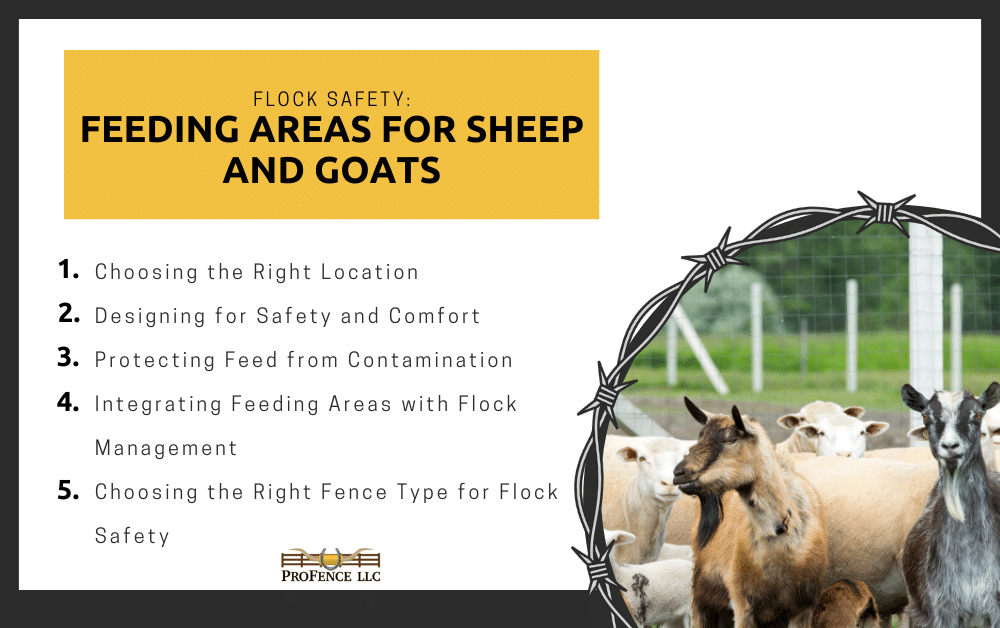
Feeding your flock isn’t just about nutrition—it’s about flock safety, organization, and peace of mind. For farmers raising sheep and goats, the way a feeding area is set up can dramatically affect animal health, feed efficiency, and overall flock safety. Poorly designed feeding spaces lead to crowding, contamination, wasted feed, and even injuries. On the other hand, a well-planned feeding area creates order, prevents disease, and keeps both livestock and farmers safer. Here’s how to design a feeding area that protects your flock year-round.
Choosing the Right Location
Keep It Elevated and Dry
Where your feeding area sits matters as much as what it’s made of. Sheep and goats need a dry, stable surface to eat comfortably. Low-lying or muddy areas increase the risk of hoof rot, parasites, and bacterial buildup. Choose higher ground whenever possible, and add gravel or crushed stone to improve drainage. A dry feeding zone not only promotes hoof health but also keeps feed from molding or spoiling. By prioritizing drainage and elevation, you create a cleaner, safer feeding environment that enhances flock safety.
Easy Access for Animals and Farmers
A feeding area should be convenient and safe for both livestock and humans. Keep it close to shelters to minimize long walks in harsh weather and ensure it’s accessible for feed delivery. Flat terrain is ideal—steep slopes can cause slips and falls for both animals and equipment. Leave enough room for small tractors or wagons so that feed can be delivered efficiently without creating traffic or stress in the herd. Accessibility reduces labor time and prevents accidents, improving flock safety overall.
Designing for Safety and Comfort
Minimize Competition and Crowding
Sheep and goats are social animals but still compete for space and food. Overcrowded feeding areas can lead to pushing, injuries, and uneven nutrition. To reduce conflict, allow at least 12–18 inches of feeder space per animal. If space allows, multiple smaller feeding stations keep groups calm and prevent dominant animals from monopolizing feed. A comfortable feeding layout encourages healthy eating habits, lowers stress levels, and improves flock safety across the herd.
Use Safe, Durable Materials
The materials you choose play a major role in flock safety. Avoid wire feeders or sharp metal edges that can cut or injure animals. Opt for smooth, sturdy materials such as treated wood or metal troughs that can withstand chewing and weather exposure. Regular fence repairs around the feeding area are also critical. Secure fencing keeps predators away, prevents escapes, and maintains a calm feeding environment. Durable design choices protect your animals and reduce maintenance costs in the long run.
Protecting Feed from Contamination
Prevent Moisture and Spoilage
Moisture is one of the biggest threats to feed quality and flock safety. Feed stored or distributed in damp areas can grow mold quickly, leading to digestive issues and respiratory illness in sheep and goats. Keep feed off the ground using raised troughs or platforms. Cover the area to shield it from rain and snow, especially during winter. A simple roof or tarp can go a long way toward protecting your investment and maintaining your flock’s health.
Reduce Waste and Parasite Risk
Cleanliness is critical to flock safety. Leftover feed, manure, and moisture attract flies and parasites. Regularly clean and sanitize troughs to prevent contamination. Rotating feeding areas also helps break parasite life cycles and allows pastures to recover. Keep mineral and salt blocks in dry containers to maintain quality and encourage balanced nutrition. These small, consistent habits promote long-term health and strengthen flock safety across your operation.
Integrating Feeding Areas with Flock Management
Align with Shelter and Water Access
The best feeding setups are designed with efficiency and flock safety in mind. Position feeding zones near shelters and water sources to reduce the energy animals spend moving between them. However, make sure water troughs are far enough from feed to prevent splashing and mud buildup. This triangular layout—feed, water, and shelter—creates a simple, functional flow that keeps your animals comfortable and minimizes stress.
Include Security Measures
A safe feeding area is also a secure one. Electric or woven wire fencing helps deter predators and keeps the flock contained, which directly supports flock safety. Lighting near feeding zones allows for easy night checks and deters unwanted visitors. Maintain visibility from your shelter or barn so you can observe the flock during feeding time. Routine inspection and maintenance, especially before winter, ensure that fencing remains effective and the feeding area stays protected.
Choosing the Right Fence Type for Flock Safety
Woven Wire Fencing with Offset Electric Wires
Woven wire fencing is one of the most effective solutions for maintaining flock safety. Its strength and stability make it ideal for both sheep and goats, who often test fence boundaries. ProFence recommends combining woven wire mesh with offset electric wires at the top and bottom to deter predators and prevent animals from escaping. This hybrid design provides a solid physical barrier while delivering a safe electrical deterrent that reinforces boundaries and enhances long-term flock safety.
High-Tensile and Multi-Strand Electric Systems
High-tensile and multi-strand electric fencing systems are popular for farmers who want flexibility and reliability. According to ProFence, these fences are durable, low-maintenance, and cost-effective for both perimeter and interior use. High-tensile wire withstands pressure and weather conditions while maintaining tension, reducing the frequency of repairs. When properly grounded and powered, electric fences create an effective, humane deterrent against predators and wandering animals.
Perimeter vs. Interior Fencing Strategies
Not every fence serves the same purpose on a farm. ProFence recommends using strong perimeter fencing for external boundaries and lighter, adaptable fences for internal divisions. Perimeter fences provide the main defense against predators, while interior fences assist in pasture rotation, separating herds, and improving feeding control. This two-layer approach balances flexibility with flock safety and efficiency.
Material Durability and Maintenance Considerations
Fence longevity plays a key role in long-term flock safety. Weather exposure, terrain, and animal behavior all affect fence wear and tear. ProFence uses durable materials such as treated posts, galvanized wire, and reinforced braces designed to withstand moisture and pressure. Routine inspections, especially before winter, help extend the life of your fencing system and prevent costly breakdowns. Reliable materials and timely maintenance protect both your investment and your flock year after year.
Building a Feeding Space That Keeps Flocks Healthy and Safe
A well-designed feeding area is a cornerstone of flock safety. It protects your animals from injury, reduces stress, prevents disease, and saves valuable feed from being wasted. By choosing a dry, accessible location, using safe materials, and maintaining clean, organized conditions, you create an environment where your sheep and goats can thrive.
Before winter sets in, take the time to inspect and improve your feeding setup. The effort you put in now will pay off in healthier animals, smoother operations, and greater peace of mind all season long.
Contact ProFence to learn how professional fencing and layout solutions can help you build a safer, more efficient feeding area that prioritizes flock safety.