Winter months bring a range of challenges that may disrupt the durability and safety standards of your farm fencing, making it crucial to stay ahead of potential issues. As conditions become harsher, even well-built fences can weaken or fail without proper attention. That’s why many farmers rely on trusted professionals like ProFence to help maintain firm, dependable boundaries through the cold season. Understanding how winter affects different fence materials makes it easier to protect livestock and minimize risks. It provides added assurance that your property stays well-protected despite unpredictable weather patterns. With the right strategies in place, you can transition into the colder months with greater confidence and peace of mind.
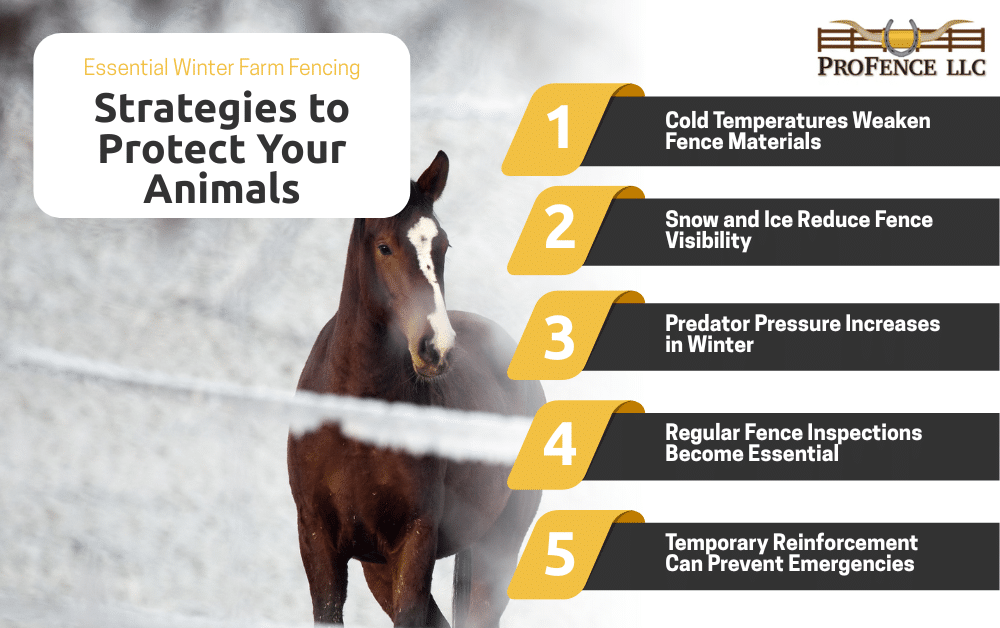
Cold Temperatures Weaken Fence Materials
How Winter Impacts Wood Durability
Cold conditions cause wood to lose moisture, making it more brittle and susceptible to cracking under pressure. As temperatures fluctuate between freezing and thawing, wood expands and contracts, further weakening its structure. This instability can allow posts to loosen and rails to shift out of alignment. Farmers often notice that even small cracks can widen quickly during the deep winter cold. Monitoring wooden components closely helps prevent larger structural failures. Understanding these changes in wood performance is essential for maintaining strong farm fencing throughout winter.
How Metal Becomes More Rigid in Winter
Metal fencing reacts differently to low temperatures, often becoming stiffer and less forgiving under stress. When strong winds or heavy snow press against the fence, rigid metal is more likely to bend, crack, or snap at weak points. This reduction in flexibility can lead to failures that catch farmers off guard. Welded joints and hardware are especially vulnerable when frozen. Identifying vulnerable points early prevents abrupt breakage. Consistent winter maintenance helps keep metal farm fencing reliable when temperatures drop.
How Wire Tension Shifts in Cold Conditions
Cold temperatures tighten wire fencing, increasing strain on posts and fasteners. When the tension becomes too high, wires can snap suddenly, leaving open gaps that create escape risks. Ice accumulation adds more weight, further stressing already tightened lines. Farmers who understand these changes in tension can take preventive measures before damage occurs. Loosening overly tight wires before extreme cold hits can help reduce risk. These adjustments ensure that wire farm fencing remains resilient during harsh winter weather.
Snow and Ice Reduce Fence Visibility
How Snow Builds Up Around Fences
Heavy snowfall can drift and pack against fence lines, making them difficult for animals to see. When livestock cannot clearly identify boundaries, they may wander too close or inadvertently step past weak points that are hidden. Deep snow can also hide damage that has already occurred. As temperatures shift, snow may melt and refreeze, creating icy layers that weigh heavily on fencing. These conditions make regular visibility checks crucial. Ensuring that fence lines are cleared when possible supports safer livestock movement.
How Ice Affects Fence Identification
Ice can coat fence rails, wires, and posts in thick layers, creating a reflective surface that distorts visibility for animals. Livestock may misjudge the location of boundaries and unintentionally apply pressure. Ice also masks structural damage that could worsen if left unnoticed. This reduces a farmer’s ability to identify issues early in the season. Monitoring ice buildup helps reduce strain on your farm fencing and prevents unexpected failures. Remaining aware of ice patterns around fencing is a key winter safety measure.
How Poor Visibility Increases Escape Risks
When fences blend into snowy surroundings, animals may rely on memory rather than sight to navigate. This increases the likelihood that livestock will wander into unsafe areas. Weakened sections concealed by snow can collapse more easily when subjected to pressure from curious or stressed animals. Reduced visibility also means predators can approach more easily without being detected. These combined hazards make boundary awareness a top priority in winter. Maintaining high visibility whenever possible strengthens the overall reliability of your farm fencing.
Predator Pressure Increases in Winter
How Scarcity Pushes Predators Closer
During winter, food sources for wildlife become limited, prompting predators to move closer to farms in search of easy meals. Livestock becomes more vulnerable during icy nights and low-visibility storm conditions. Predators may test weakened fence lines or exploit small gaps hidden by snow. A strong perimeter becomes essential for deterring unwanted wildlife. Enhanced monitoring helps farmers stay ahead of these seasonal threats. Reinforced farm fencing provides a dependable barrier that protects animals from winter predators.
How Reinforced Wire Helps Block Access
Reinforcing wire fencing adds strength to vulnerable sections that predators might target. Heavy-gauge wire or additional strands create a more secure barrier that discourages attempts to push through. This reinforcement remains effective even when snow and ice put pressure on existing fence structures. Farmers often apply upgrades before winter hits to reduce the need for emergency repairs. Strong wire reinforcement works well for livestock areas needing extra protection. These precautions strengthen the overall safety and security of your winter environment.
How Electric Fencing Supports Winter Safety
Electric fencing offers an additional layer of deterrence during the winter months. Even with reduced daylight and colder temperatures, properly maintained electric lines maintain consistent performance. Predators quickly learn to avoid energized boundaries, reducing infiltration attempts. Snow buildup should be monitored to prevent grounding issues that weaken the system. When managed correctly, electric fencing serves as a reliable winter defense. This added protection enhances the overall effectiveness of farm fencing throughout the season.
Regular Fence Inspections Become Essential
How Storms Create Hidden Damage
Winter storms bring powerful winds, snow, and ice that can weaken fence structures unseen. Posts may shift slightly under pressure, creating instability over time. Panels or wires can bend, loosen, or crack beneath heavy snow loads. Early detection of these changes prevents minor issues from becoming major failures. Frequent inspections allow farmers to identify weaknesses before animals find them. Staying proactive helps keep farm fencing strong despite harsh conditions.
How Wind Stress Impacts Fence Posts
Persistent winter winds can loosen posts, causing gradual leaning that compromises the entire fence line. Over time, even small movements can lead to sagging wires or unstable rails. Exposed posts suffer more during freeze-thaw cycles, which expand the soil around them. Inspections help farmers spot early signs of shifting before structural collapse occurs. Addressing post movement promptly keeps fences secure against ongoing weather stress. Strong posts form the foundation of reliable farm fencing year-round.
How Early Repairs Prevent Bigger Problems
Small cracks or loose components can escalate quickly in freezing temperatures. When issues are addressed early, farmers avoid costly repairs and reduce the risk of livestock escaping. Repairs performed during mild-weather windows help prevent further deterioration of fences. Early action also protects animals from injury caused by sharp edges or broken sections. This proactive approach is essential for long-term fence integrity. Routine winter checks ensure your farm fencing performs safely under severe conditions.
Temporary Reinforcement Can Prevent Emergencies
How Portable Panels Provide Quick Solutions
When a section of fence becomes compromised in extreme weather, portable panels provide quick reinforcement. These panels can be installed even in snowy or icy conditions where permanent repairs are complex. They help maintain secure boundaries until the weather improves. Their flexibility allows farmers to quickly cover significant gaps or weakened sections. Portable options are beneficial for containing active or curious livestock. These temporary measures preserve the effectiveness of your farm fencing during emergencies.
How Electric Tape Supports Short-Term Safety
Electric tape is lightweight and easy to install when immediate reinforcement is needed. It provides a clear visual boundary for animals, reducing the chance of accidental breaches. Even though it’s temporary, electric tape delivers a reliable deterrent when installed correctly. Farmers often combine it with existing wires to strengthen vulnerable areas. Its bright visibility also helps animals identify safe zones during storms. Using electric tape helps maintain the security of farm fencing in challenging winter conditions.
How Extra Wire Adds Strength Quickly
Adding additional wire strands can immediately stabilize a weakened section of fence. Farmers can apply these reinforcements even in freezing temperatures, when other materials may not adhere correctly. Extra wire helps distribute pressure more evenly across the fence line. This reduces strain on damaged posts or rails until complete repairs can be made. Quick wire reinforcement prevents minor problems from escalating into emergencies. These temporary adjustments help maintain the durability of farm fencing throughout winter.
Conclusion
Winter weather puts significant strain on farm fencing, making proactive care essential to keep livestock safe and secure. By understanding how cold temperatures, snow, ice, and predators affect fence performance, farmers can prepare more effectively for seasonal challenges. Regular inspections and timely reinforcements can prevent major failures and protect animals from danger. When specialized support is needed, many farmers turn to ProFence for dependable guidance and professional service. Taking these steps ensures your fencing remains strong and resilient throughout the harshest months.
Contact ProFence today to schedule expert winter farm fencing assistance and secure your property before the next cold front arrives.