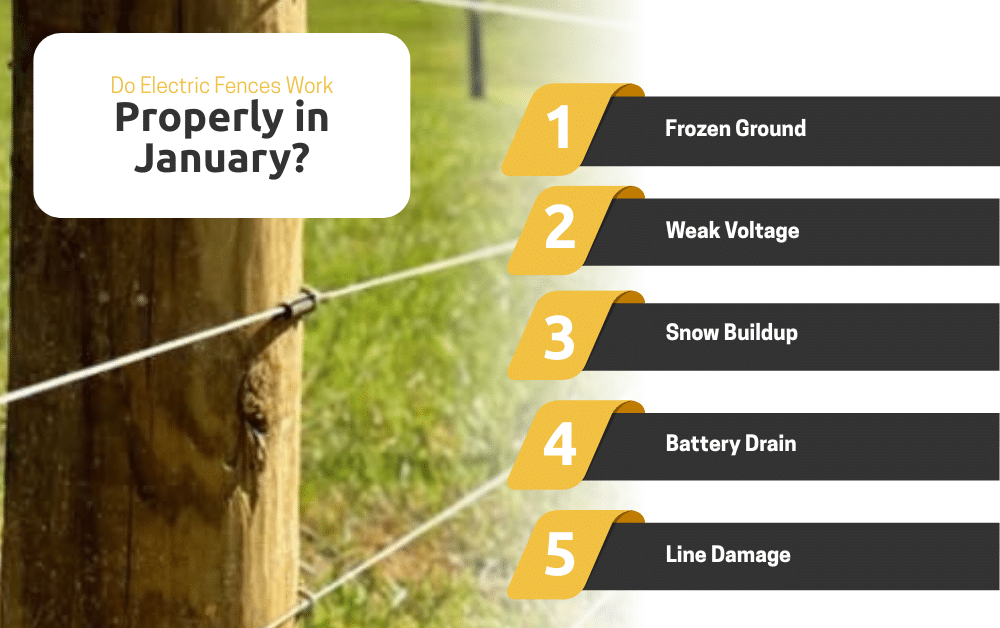
January brings freezing temperatures, snowstorms, short days, and unpredictable weather across the Mid-Atlantic. It’s also a time when livestock owners depend heavily on fencing to keep animals secure and predators out. But winter raises a common concern: Do electric fences work properly in January?
The short answer: Yes — electric fences can function extremely well in winter.
But they need a little more attention than they do during the warmer months. Cold temperatures, frozen ground, and snow all affect how electric fences deliver power, and ignoring these seasonal challenges will reduce voltage and reliability.
Whether you run cattle, horses, sheep, goats, or high-tensile perimeter fencing, here’s everything you need to know about keeping electric fences working at full strength throughout January.
How Electric Fences Work
To understand why winter impacts electric fencing, it helps to know the basics of how they function.
An electric fence system includes:
- Energizer (powers the fence)
- Ground rods (complete the electrical circuit)
- Conductive wire (high-tensile, polywire, etc.)
- Insulators (prevent shorts)
- Connection hardware
Electric fences rely on a complete electrical circuit:
- The energizer sends a pulse through the fence wire.
- When an animal touches the fence, the electric pulse travels through the animal into the ground.
- The pulse flows through soil to the grounding system, and back to the energizer.
For the fence to work properly, the grounding must be strong, and this is exactly where winter creates problems.
Winter Conditions That Impact Electric Fence Performance
January introduces several factors that can reduce electric fence performance if you’re not prepared. Let’s break down the most common issues.
1. Frozen Ground Weakens Grounding
Ground rods work best in warm, moist soil. But in January, the top layer of soil freezes, limiting the rod’s ability to pull power back into the energizer.
This is the #1 cause of weak fences in winter.
Frozen soil = poor conductivity = lower shock strength.
2. Snow & Ice Build-Up on the Fence Line
- Wet snow increases resistance on the line.
- Dry snow acts like an insulator and reduces energy return.
- Ice buildup can create cold spots that disrupt current flow.
Snow pressed against wires or accumulated in corners also drains voltage.
3. Battery Performance Drops in Cold Temperatures
If your fence relies on a battery-powered energizer, expect a decline in efficiency in winter.
Cold weather:
- Slows chemical reactions inside batteries
- Reduces available voltage
- Causes faster battery drain
For solar-powered units, shorter daylight hours and low-angle sun also reduce charging capacity.
4. Fallen Branches & Wind Debris
Winter windstorms often drop branches onto fence lines.
Dead summer vegetation can also press against wires — grounding the fence and weakening the pulse.
Even one branch lying across the line can cause a voltage drop.
Signs Your Electric Fence Isn’t Working Properly in January
Electric fences rarely fail without warning. Here are the most common signs of a winter performance issue:
- Weak or inconsistent clicking from the energizer
- Livestock testing the fence more often
- Lower readings when using a digital fence tester
- Sparking, sizzling, or popping where snow touches the line
- Energizer shutting off during extreme cold
- Noticeable drop in predator deterrence
If any of these show up, it’s time for a mid-winter inspection.
How to Keep Electric Fences Working Properly in Winter
Electric fences can absolutely perform in January—the key is preparation and ongoing maintenance. Here’s how to keep your system working reliably during the coldest months.
Clear the Fence Line Regularly
Keep snow, branches, and debris off the wires.
- Walk fence lines after storms.
- Remove fallen limbs immediately.
- Knock off heavy ice or snow buildup.
This simple step dramatically improves winter performance.
Inspect All Connections
Cold temperatures cause wires and hardware to contract.
Check:
- Wire tension
- Insulators for cracks
- Connection points for rust
- Splices for looseness
- Ground clamps for corrosion
A single loose connection can drop voltage across the entire fence line.
Protect Battery & Solar Units
For battery-powered electric fences:
- Store batteries in insulated boxes.
- Keep them off frozen ground.
- Charge regularly or rotate with fresh batteries.
For solar energizers:
- Clear snow off panels
- Angle panels toward maximum winter sunlight
- Consider upgrading to a larger battery for extended night coverage
Use a Digital Fence Tester Weekly
Quick voltage testing helps detect problems early.
Targets to aim for:
- Livestock containment: 5,000–7,000 volts
- Predator deterrence: 7,000–9,000 volts
- Horses: 3,000–4,000 volts
If the fence reads below recommended levels, it’s time to troubleshoot.
When Electric Fences Struggle—And What to Do About It
Even well-maintained fences can struggle in extreme January conditions.
Here’s what might happen and how to fix it:
Problem: Extremely Frozen Ground
Solution: Use “hot/ground” fencing, where one wire is hot and another is a ground-return wire. This creates a complete circuit even without soil contact.
Problem: Heavy Ice Storms or Packed Snow
Solution: Temporarily deactivate certain sections, remove buildup, and reactivate once clear.
Problem: Solar units not charging
Solution:
- Switch to AC power if possible
- Add an auxiliary battery
- Move panels to a higher-light angle
Problem: Voltage dropping randomly
Solution:
- Check for hidden shorts under snow
- Verify all insulators
- Look for loose connections from cold contraction
If issues persist, a professional inspection is recommended.
Benefits of Well-Maintained Electric Fences in Winter
A strong electric fence in January offers several advantages:
✔ Reliable Livestock Containment
Winter weather stresses animals, causing them to push boundaries more than usual.
✔ Predator Deterrence
Coyotes, foxes, and stray dogs become more aggressive in cold months as food sources decline.
✔ Fewer Emergencies in Harsh Conditions
A weak fence during a snowstorm can quickly turn into a dangerous situation.
✔ Protects Your Investment
Regular winter maintenance prevents costly repairs in spring.
Why Farmers Trust ProFence for Electric Fence Installation & Winter Prep
Farmers, ranchers, and property owners across the Mid-Atlantic trust ProFence for durable, reliable electric fencing built to handle winter challenges.
What sets ProFence apart:
- Expert installation of high-quality electric fences
- Proper grounding systems customized for your property
- Winter fence inspections and maintenance support
- Professional-grade materials that withstand harsh temperatures
- Solutions tailored for cattle, horses, goats, sheep, and perimeter control
Whether you’re dealing with predator issues or livestock containment, ProFence knows how to build electric fence systems that perform year-round.
Electric Fences Can Work in January — With the Right Preparation
Electric fences absolutely work in January—but they need the right maintenance and setup to handle freezing temperatures, snow, and winter wear.
By improving your grounding system, checking connections, protecting your energizer, and clearing the fence line, you can maintain strong voltage even on the coldest days of the year.
If you want reliable performance all winter long, proactive care is essential.
Planning to upgrade or install a reliable electric fence for 2026?