Spring is one of the most anticipated seasons on the farm. Pastures begin to green up, livestock are eager to move, and farmers prepare for the start of spring grazing. But before animals are turned out, one critical question needs to be answered: are your fence lines actually ready?
Fence lines that held up through winter aren’t always ready for the pressure that comes with spring grazing. Thawing ground, increased livestock movement, and months of hidden winter damage can quickly turn weak fence lines into costly problems. A little preparation now can prevent escapes, injuries, and unnecessary repairs once grazing season begins.
Why Spring Grazing Puts New Pressure on Fence Lines
Spring grazing changes everything about how livestock interact with fences. After months of winter confinement or limited movement, animals behave differently once they’re released into pasture.
Increased Livestock Energy
Cattle, horses, goats, and sheep are more active in early spring. Fresh grass, warmer temperatures, and more space mean:
- More pacing along fence lines
- More pushing and testing of boundaries
- More pressure on posts, wire, and gates
Fence lines that survived winter without much contact can suddenly be under constant stress.
Wet, Thawing Ground
Spring grazing often begins when soil is still soft from snowmelt and rain. Saturated ground:
- Reduces post stability
- Allows posts to lean or shift under pressure
- Increases the chance of fence failure in low spots
Early-Season Escapes
The combination of energetic livestock and weakened fence lines makes early spring one of the highest-risk times for escapes. Animals don’t need a major break — just one loose wire or leaning post is often enough.
Common Fence Problems That Appear Before Spring Grazing
Winter damage isn’t always obvious until you start preparing for turnout. Some of the most common fence issues farmers encounter in early spring include:
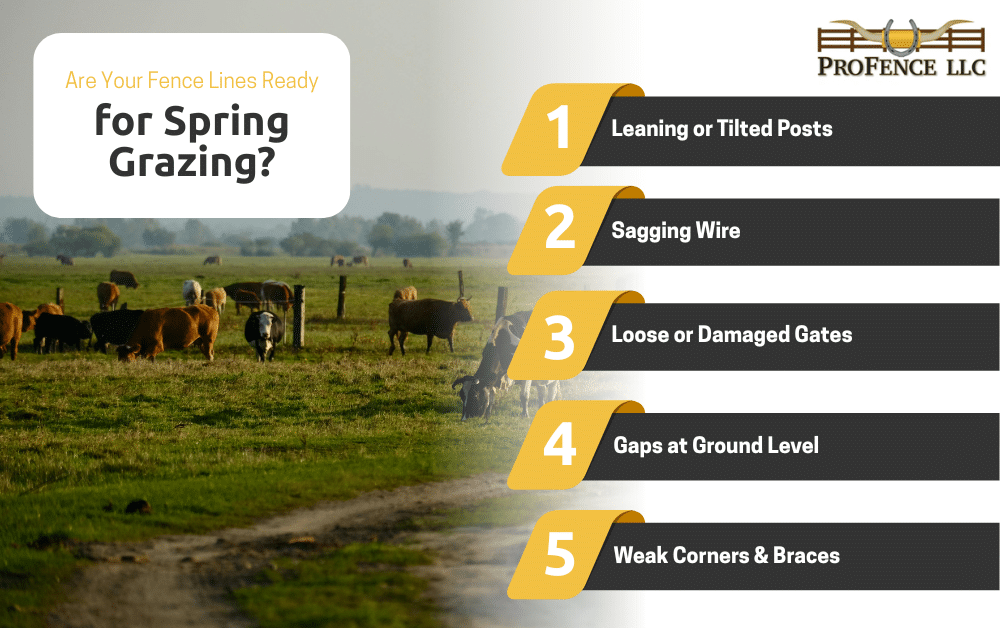
- Leaning or tilted posts caused by freeze–thaw cycles
- Sagging wire where tension shifted over winter
- Loose or damaged gates that no longer latch correctly
- Gaps at ground level from erosion or soil movement
- Weak corners and braces that loosened under winter stress
These issues often go unnoticed until livestock find them — and animals are very good at finding weak spots.
How to Inspect Fence Lines Before Turnout
A thorough inspection is the best way to make sure your fence lines are ready for spring grazing. Don’t wait until animals are already in the pasture.
Walk the Entire Fence Line
Inspect every section, not just areas where you’ve had trouble before. Pay close attention to:
- Changes in elevation
- Low-lying areas
- Fence lines near water or drainage paths
Test Post Stability
Push gently on posts by hand or foot. If a post moves easily, it may not withstand grazing pressure.
Check Wire and Rails
- Look for sagging or loose wire
- Check for broken staples or fasteners
- Ensure rails are secure and aligned
Inspect Gates Thoroughly
Gates often take the most abuse during spring grazing.
- Make sure hinges are tight
- Confirm latches close fully
- Check that gates swing freely without dragging
Focus on Corners and Bracing
Corners carry the most tension in any fence system. If corners fail, entire fence sections can loosen quickly.
A careful inspection now can prevent emergency repairs later.
Fence Types and Their Role in Spring Grazing
Not all fence systems perform the same under spring grazing conditions. Choosing the right fence type — and maintaining it properly — plays a big role in success.
Woven Wire Fencing
- Excellent containment for mixed livestock
- Strong against pushing and rubbing
- Ideal for perimeter fencing during grazing season
High-Tensile Fencing
- Well-suited for rotational grazing systems
- Maintains tension even under repeated livestock pressure
- Requires proper bracing and post depth to perform well in spring
Electric Fencing
- Flexible and effective for pasture management
- Works best when grounding and voltage are maintained
- Needs extra attention in wet spring conditions
Board Fencing
- High visibility helps guide livestock movement
- Common in high-traffic areas near barns or lanes
- Requires inspection for rot or loose fasteners after winter
Each fence type has strengths, but all require inspection and maintenance before spring grazing begins.
Preparing Fence Lines for Wet Spring Conditions
Spring moisture is one of the biggest challenges for fence stability. Preparing for wet conditions helps prevent long-term damage.
Address Drainage Issues
Standing water weakens soil around posts. Redirecting runoff or improving drainage along fence lines reduces erosion and shifting.
Reinforce Soft Areas
Posts in saturated soil may need:
- Resetting to proper depth
- Additional backfill and compaction
- Replacement if rot or damage is present
Clear Debris and Overgrowth
Winter storms often leave behind:
- Fallen branches
- Dead vegetation
- Debris pressing against wires
Clearing fence lines improves visibility and prevents unnecessary strain.
Prevent Erosion Early
Small washouts around posts can grow quickly once grazing begins. Filling and stabilizing these areas early protects fence integrity.
Repair vs. Replacement Before Spring Grazing
Not every fence issue requires full replacement, but temporary fixes often fail under grazing pressure.
Repairs May Be Enough If:
- Posts are solid and properly set
- Wire tension can be restored
- Damage is isolated to small sections
Replacement Is Often the Better Choice If:
- Posts are rotted or cracked
- Fence lines shift every spring
- Corners or gates repeatedly fail
- Multiple weak points exist along the line
Investing in proper repairs or replacements before spring grazing often saves money compared to repeated mid-season fixes.
How ProFence Helps Prepare Fence Lines for Spring Grazing
At ProFence, spring grazing prep is a core part of what we do. Our team understands how livestock behavior, soil conditions, and seasonal weather affect fence performance.
What ProFence Offers
- Fence upgrades designed for rotational grazing systems
- Solutions for wet ground and challenging terrain
- Experience with farm fencing throughout the Mid-Atlantic
By addressing issues early, ProFence helps farmers avoid delays, escapes, and emergency repairs once grazing season is underway.
Strong Fence Lines Make Spring Grazing Safer and Easier
Spring grazing puts more pressure on fence lines than almost any other time of year. Energetic livestock, soft ground, and lingering winter damage can quickly expose weaknesses if fences aren’t properly prepared.
Taking the time to inspect, repair, and reinforce fence lines before turnout:
- Reduces livestock escapes
- Protects animals from injury
- Prevents costly mid-season repairs
- Keeps grazing plans on schedule
Spring arrives fast, and fence problems only get harder to fix once animals are in the pasture.
If you’re planning for spring grazing, now is the time to make sure your fence lines are ready. ProFence provides professional inspections, repairs, and upgrades designed specifically for grazing season demands.
👉 Contact ProFence today at https://profence.org/ to schedule a fence inspection or prepare your fence lines before spring grazing begins.
Strong fences make for safer livestock and smoother grazing seasons.