When planning a new fence, most property owners focus on materials, layout, and cost. It makes sense. You want a fence that looks good, functions well, and lasts for years.
But there’s one critical step that often gets overlooked: land clearing.
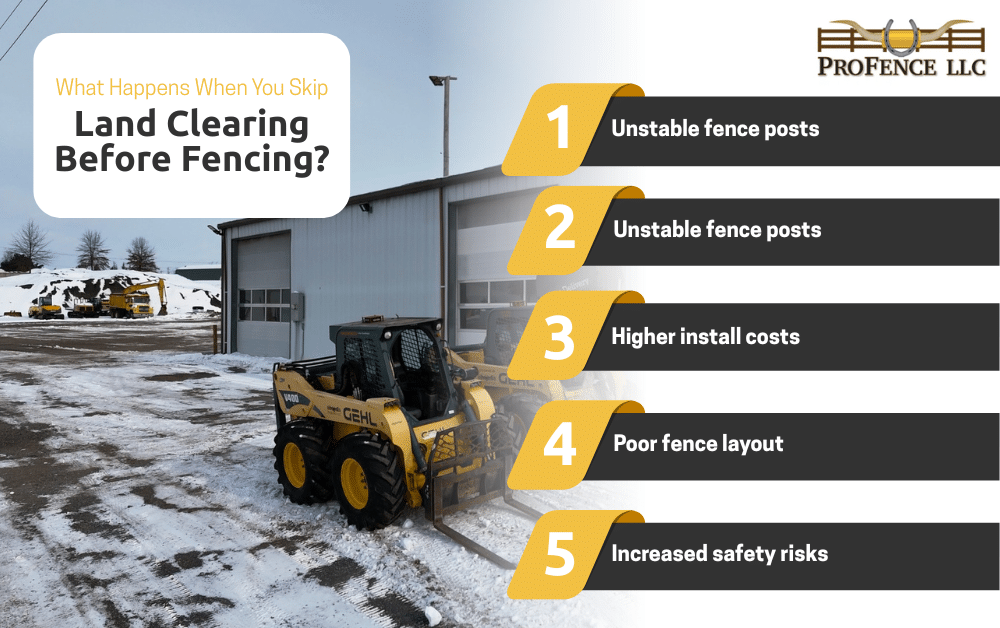
Many people assume fencing can be installed directly on existing ground, even if it’s overgrown, uneven, or filled with obstacles. In reality, skipping land clearing is one of the fastest ways to create long-term problems. From unstable posts to higher costs and premature failure, poor site preparation can impact every part of your fence system.
If you want a fence that performs well and lasts, it starts with proper land clearing.
Why Land Clearing Matters Before Fence Installation
Land clearing is more than just cutting down brush or removing a few trees. It involves preparing the ground so fencing can be installed correctly and function as intended.
This process may include:
- Removing brush, weeds, and overgrowth
- Clearing trees, stumps, and roots
- Eliminating rocks and debris
- Leveling uneven terrain
- Creating a clean, accessible fence line
Fencing relies on stable ground and consistent conditions. Without proper land clearing, even the best materials and installation techniques can fall short.
Problem 1: Weak Fence Stability and Poor Post Installation
One of the most immediate issues with skipping land clearing is poor post installation.
Unstable Soil Conditions
When posts are installed in ground filled with roots, rocks, and debris, they cannot be set properly. This leads to:
- Inconsistent post depth
- Uneven alignment
- Reduced structural support
Posts may appear secure at first but often fail under pressure.
Long-Term Movement Issues
Over time, improperly set posts begin to shift. As the ground settles or moisture levels change, you may notice:
- Leaning fence lines
- Loose or wobbly posts
- Sections pulling out of alignment
Once this happens, repairs become more frequent and more expensive.
Problem 2: Increased Installation Costs and Delays
Skipping land clearing might seem like a way to save money, but it often leads to the opposite outcome.
Unexpected Obstacles
When fencing crews encounter roots, stumps, or buried debris during installation, the process slows down quickly. This can require:
- Additional labor
- Specialized equipment
- Adjustments to the original plan
What started as a straightforward project can become complicated.
Project Delays
Unprepared land often causes delays that push timelines back. Work may need to stop while obstacles are removed or conditions are corrected.
This not only increases labor costs but can also impact scheduling for other parts of your project.
Problem 3: Reduced Fence Lifespan
A fence installed on unprepared land is more likely to deteriorate faster than one built on a properly cleared site.
Moisture and Vegetation Damage
Overgrown vegetation traps moisture around fence posts and wire. This creates conditions that accelerate:
- Wood rot
- Rust and corrosion
- Material breakdown
Even high-quality materials can fail prematurely when exposed to constant moisture and organic buildup.
Ongoing Maintenance Issues
Without land clearing, vegetation continues to grow around and into the fence line. This leads to:
- Frequent clearing and trimming
- Increased wear on fencing materials
- Higher long-term maintenance costs
Instead of a one-time investment, the fence becomes an ongoing project.
Problem 4: Poor Fence Line Layout and Functionality
Fence layout is critical to performance, especially for farms and large properties. Skipping land clearing often forces compromises that reduce efficiency.
Obstructed Fence Paths
Trees, brush, and uneven terrain can limit where a fence can be installed. This results in:
- Irregular fence lines
- Awkward angles and weak points
- Reduced structural integrity
A clean, straight fence line is always stronger and easier to maintain.
Limited Accessibility
If fence lines are difficult to access, routine tasks become harder. This includes:
- Inspections
- Repairs
- Moving livestock
- Maintaining gates
Poor accessibility leads to neglected maintenance and faster deterioration.
Problem 5: Hidden Safety Risks
Beyond structural issues, skipping land clearing can create safety hazards for both livestock and property owners.
Common risks include:
- Sharp debris hidden in overgrowth
- Uneven ground that increases injury risk
- Stumps and roots that interfere with movement
- Weak fence sections that animals can push through
Livestock are especially sensitive to their environment. If a fence line contains obstacles or weak points, animals will find them.
How Proper Land Clearing Prevents These Problems
Investing in land clearing before fencing eliminates many of these issues and sets your project up for long-term success.
Creates a Stable Foundation
Clear, prepared ground allows posts to be set at the proper depth and alignment. This improves overall fence strength and durability.
Improves Installation Efficiency
With obstacles removed, installation crews can work efficiently and stay on schedule. This reduces labor costs and prevents delays.
Extends Fence Lifespan
Removing vegetation and debris reduces moisture buildup and material wear. This helps your fence last longer with fewer repairs.
Supports Better Fence Layout
Land clearing allows for straight, well-planned fence lines that maximize strength and functionality. This is especially important for farms and large properties.
When Land Clearing Is Absolutely Necessary
While some properties may need minimal preparation, many situations require full land clearing before fencing.
You should strongly consider land clearing if your property includes:
- Overgrown brush or dense vegetation
- Trees, stumps, or root systems
- Uneven or rocky terrain
- Previously unused or unmanaged land
- Areas with limited access or visibility
Addressing these conditions early prevents problems later.
How ProFence Handles Land Clearing and Fence Installation Together
At ProFence, we understand that fencing is only as strong as the ground it is built on. That is why we offer both land clearing and fence installation as part of a complete solution.
Our approach includes:
- Evaluating your property and identifying potential obstacles
- Clearing and preparing fence lines for optimal installation
- Designing layouts that maximize durability and efficiency
- Installing fencing systems built to perform long term
By handling both land clearing and fencing, we ensure your project is done right from the start.
Start With the Right Foundation
Skipping land clearing may seem like a shortcut, but it often leads to more problems than it solves. From unstable posts and higher costs to reduced lifespan and safety risks, poor preparation can impact every part of your fence system.
A strong, reliable fence starts with proper groundwork. Land clearing is not an extra step. It is the foundation of a successful fencing project.
Get Your Property Ready the Right Way
If you are planning a fence installation, make sure your property is prepared for long-term success.
ProFence provides professional land clearing and fencing services designed to deliver durable, high-quality results.
Contact ProFence today at https://profence.org/ to get started on your land clearing and fencing project.